 Illustrative image
Used Refrigerated Standard height
20ft Refrigerated Container (Reefer) — Used
from $6,750
Non-working
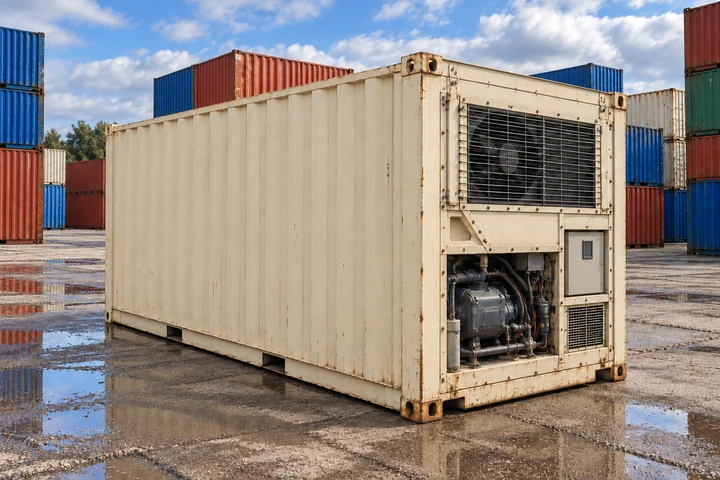
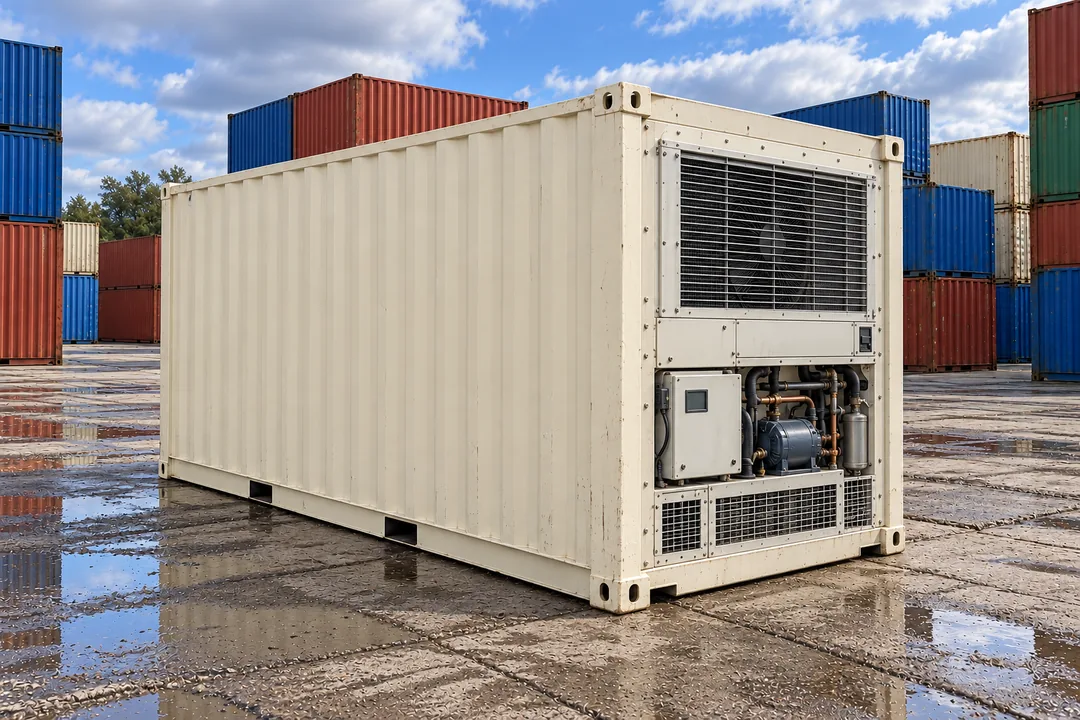
A new 20ft refrigerated container is a one-trip reefer: a new insulated 20-foot box with a new refrigeration unit, sold after carrying cargo on a single voyage. Its starting price this week is $27,000, before delivery and sales tax. That’s $18,050 more than a used 20ft reefer with working machinery.
 Illustrative image
Why LandedBox
One free request goes to up to 5 sellers serving your address, each checked for licensing and insurance, and you compare their quotes or accept none. How it works
New 20ft reefers come with refrigeration units from different makers, so compare the unit each quote offers as well as the box.
$450Average gap between the highest
and lowest quote on the same request
We’ll help you
compare prices.
For a reefer, “new” should mean one-trip: a new insulated box and a new marine refrigeration unit, built to run on three-phase power. The new 20ft reefer sold here is rated to hold interior temperatures as low as −10 °F (−23 °C).
Not every listing labeled “new” is the same thing. Some are a used container fitted with a new cooling unit that runs on single-phase power, which may be rated for chilled storage only. They can cost less, but they aren’t a one-trip reefer. Before you compare prices, check three things in the listing: the condition of the box, the power the unit needs and the temperature range it holds.
This week, a used 20ft reefer with working machinery starts at $8,950. A non-working one starts at $6,750, but it’s only an insulated box: it won’t cool. Paying for new buys a box that has made one trip instead of years at sea, and a refrigeration unit covered by its manufacturer’s warranty, where used machinery carries only what the seller guarantees.
Go used if you need cold storage for a season or a few years and can live with older machinery: a used 20ft reefer does that for far less. Go new if the container will run every day for years and you want the unit under its manufacturer’s warranty.
Good for: long-term chilled or frozen storage on your site.
A marine reefer runs on three-phase power, nominally 380–460 V; in the US, that usually means 460 V at 60 Hz. It won’t run on a household outlet. If your site has 190–230 V three-phase instead, the unit needs an autotransformer, an option to ask for in your request.
For your electrician: on a common Carrier PrimeLINE unit, the main circuit breaker is rated 25 A at 460 V, and the controller caps the draw on each phase at 21 A by default. That limit can be set anywhere from 15 to 23 A, but a lower limit also means less cooling capacity. Your electrician sizes the circuit; ask the seller for the make, model and power plug of your unit, so a matching receptacle can be fitted before delivery.
Common units can be set from −31 °F to +86 °F (−35 °C to +30 °C) on a Carrier PrimeLINE, or −40 °F to +86 °F (−40 °C to +30 °C) on a Thermo King Magnum Plus, but the setpoint isn’t always what the box reaches: the load, how often the doors open and the outside heat all play a part. Power and temperature for all reefers.
| Measurement | Feet, inches, pounds | Metric |
|---|---|---|
| Outside (L × W × H) | 19′10½″ × 8′ × 8′6″ | 6.06 × 2.44 × 2.59 m |
| Inside (L × W × H) | about 17′10″ × 7′6″ × 7′1″–7′5″ | about 5.45 × 2.28–2.29 × 2.16–2.27 m |
| Door opening (W × H) | about 7′6″ × 7′5″ | about 2.29 × 2.26 m |
| Inside volume | about 990–1,010 cu ft | about 28.1–28.6 m³ |
| Empty weight (tare) | about 6,300–6,640 lb | about 2,860–3,010 kg |
| Max. payload | about 60,560–64,240 lb | about 27,470–29,140 kg |
| Max. gross weight | 67,200–70,550 lb | 30,480–32,000 kg |
| Tilt-bed truck access | 60–80 ft (18–24 m) of straight approach, 10–14 ft (3–4.3 m) wide; 14–16 ft (4.3–4.9 m) of overhead clearance, about 20 ft (6 m) where the container tilts off; ground that’s firm, dry and level (5° slope at most) | |
Sources: ISO 668 (type 1CC, 20ft); 20ft reefer (ISO code 22R1) specs from two ocean carriers. Your container’s exact weights are marked on its doors.
Reefers ship from the depot of the seller you choose; ask it which truck it sends and how much space it needs. In your request, say which way the doors should face and where your three-phase power supply is, so the seller can place the container with its refrigeration unit close to the power.
Delivery cost and site checklist · container foundation options
$27,000 is this week’s starting price for the container and its new refrigeration unit; delivery and sales tax are extra. Reefer prices and how we set them.
A new refrigerated container that carried cargo on a single trip and was then sold, instead of going on to years of shipping service. Expect a few light marks from that one trip at most.
About 990–1,010 cu ft (28.1–28.6 m³) inside, roughly 15% less than a dry 20ft container: insulation lines the walls, roof and floor, and the refrigeration unit takes up space at one end. The inside measurements are in the specs table above.
No. A marine reefer needs three-phase power, and a standard home outlet is single-phase. If your site has 190–230 V three-phase, an autotransformer can make it work; if it has no three-phase service at all, ask your electrician or utility what’s possible at your address.
Illustrative image  Illustrative image
 Illustrative image
See all refrigerated containers.